
Verifying a contractor's credentials is the single most effective way to protect your investment in a custom home. In Florida, the regulatory landscape is specific, and understanding the difference between a license and a certification is vital for homeowners in Sarasota and beyond. Vertical Custom Homes emphasizes that a thorough background check on licensing is not just a bureaucratic step, but a fundamental safety measure for your project. For additional details, review the verticalcustomhomes com.
1. Verify the State Contractor License Number
Confirm the license is active and in good standing with the Florida Department of Business and Professional Regulation (DBPR). Every general contractor in Florida must hold a valid license issued by the state. You can search the DBPR database to ensure the license number matches the company name and that the status is active. This step confirms the builder is legally permitted to perform construction work in the state.
2. Check for Disciplinary Actions and Complaints
Review the contractor's history for any formal complaints or disciplinary orders. The DBPR public records show if a license has been suspended, revoked, or if the contractor is under investigation. A clean record indicates a professional who adheres to state regulations and ethical standards. This transparency helps you avoid builders with a history of non-compliance.
3. Confirm General Contractor Classification
Ensure the license classification matches the scope of your custom home project. In Florida, a General Contractor (GC) license is required for building new homes. Some licenses are limited to specific trades, such as roofing or electrical, and do not authorize full structural construction. Vertical Custom Homes holds the appropriate general contractor classification to manage the entire build process from foundation to finish.
4. Validate Prequalification and Bonding
Check if the contractor is prequalified for public works and maintains required surety bonds. While private residential projects do not always require public prequalification, it serves as a strong indicator of financial stability and operational excellence. Prequalification involves a rigorous review of the company's financials, safety records, and project history. This level of scrutiny provides additional peace of mind for high-value custom builds.
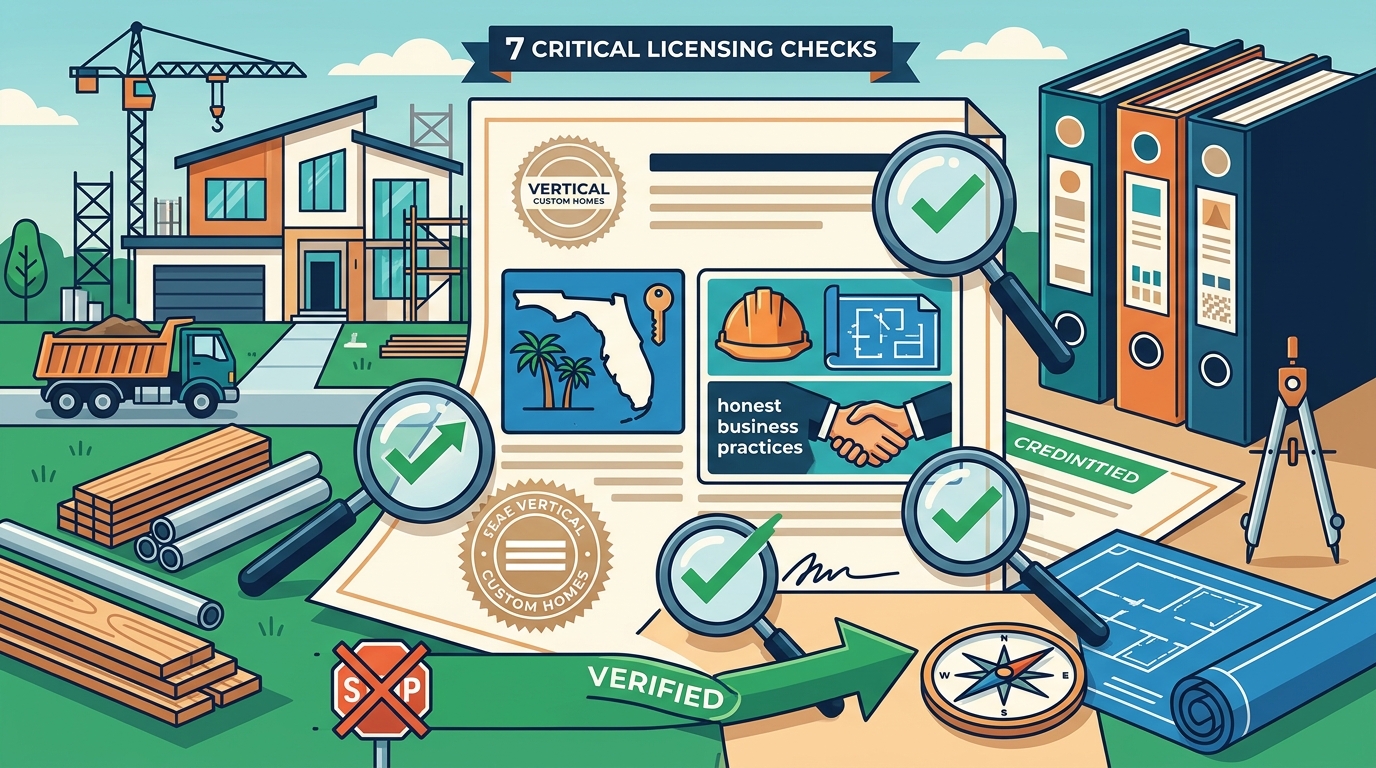
5. Verify Insurance Coverage and Limits
Request current certificates of insurance for general liability and workers' compensation. A licensed builder must carry adequate insurance to protect you from liability in case of accidents or property damage. Verify that the policy limits are sufficient for the scale of your project. This check ensures that any incidents on your site are covered by the builder's insurance, not your personal assets.
6. Review Local Municipal Permits and History
Check the contractor's permit history with your local building department. Local jurisdictions like the City of Sarasota or Sarasota County maintain records of permits pulled by contractors. A builder with a consistent history of approved permits and passed inspections demonstrates local expertise and regulatory compliance. This local footprint is crucial for navigating specific zoning and building codes in the Sarasota area.
7. Confirm Professional Affiliations and Certifications
Look for memberships in recognized industry organizations such as the National Association of Home Builders (NAHB). While not a legal requirement, professional affiliations often require adherence to strict codes of ethics and continuing education. These certifications signal a commitment to industry best practices and ongoing professional development. Vertical Custom Homes aligns with these high standards to ensure quality and integrity in every project. according to Home Improvement Resources
Choosing the Right Builder
When selecting a custom home builder, prioritize those who proactively provide their licensing and insurance documentation. A reputable firm will welcome these checks and provide clear, verifiable proof of their credentials. At Vertical Custom Homes, we believe in total transparency, ensuring our clients in Sarasota and beyond can build with confidence and clarity.
Frequently Asked Questions
Is a state license the same as a local permit?
No, a state license authorizes a contractor to perform work in Florida, while a local permit is issued by a specific municipality for a specific project. You need both: the builder must be licensed, and the project must be permitted locally.
How often should I check a contractor's license status?
You should verify the license status before signing a contract and again before major project milestones. Licenses can expire or be suspended, so periodic checks ensure the builder remains in good standing throughout the build.
What is the difference between a GC license and a trade license?
A General Contractor (GC) license allows a company to manage the entire construction project, including structural work. A trade license is limited to specific services, such as plumbing or electrical, and does not authorize full home construction.
Can I build a custom home without a licensed contractor?
In Florida, you generally cannot pull a building permit for a new home without a licensed general contractor. While owner-builders have some exceptions, they are complex and rarely recommended for custom homes due to the liability and code compliance challenges.
Where can I find a contractor's insurance certificate?
You should request the certificate directly from the contractor's insurance agent or broker. Reputable builders will provide this document readily upon request, showing current coverage for general liability and workers' compensation. Learn more: verticalcustomhomes com.