
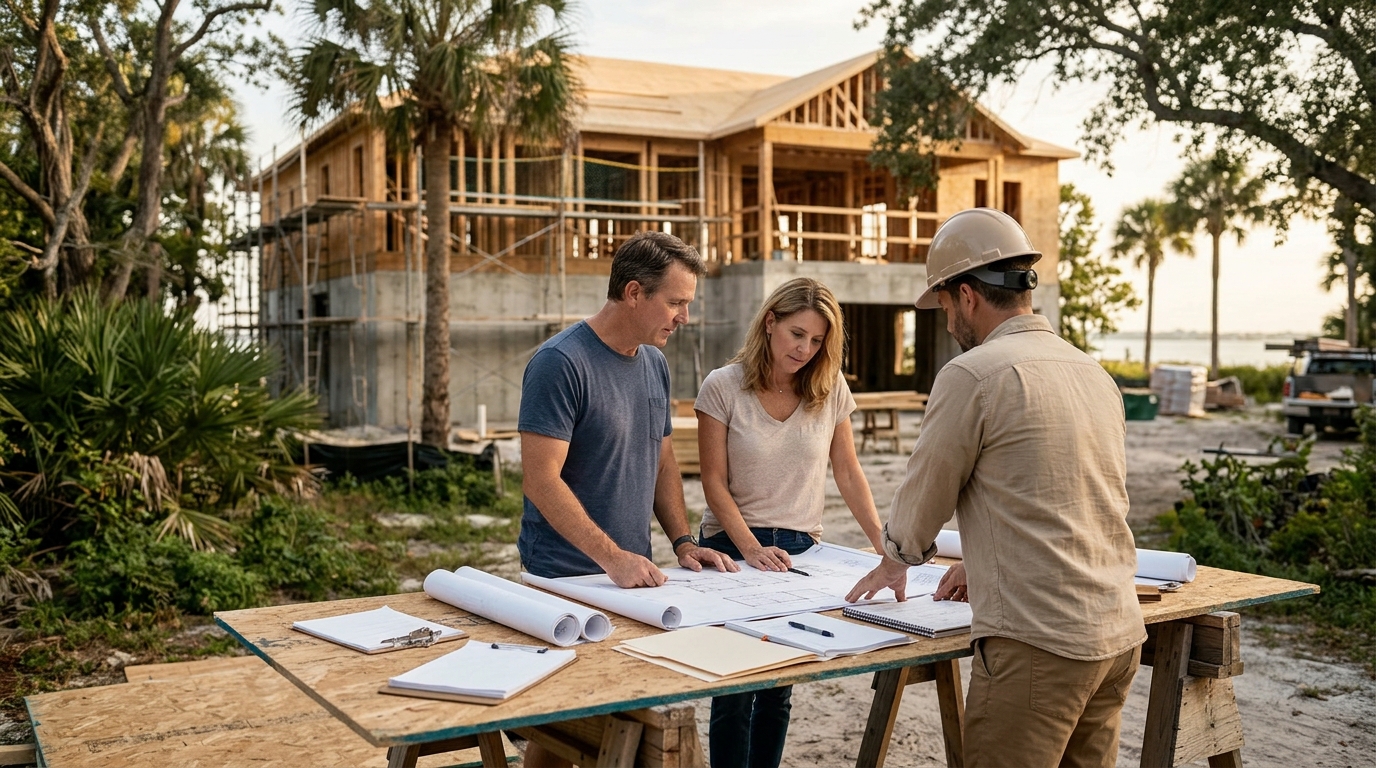
Financing a custom home in Sarasota typically requires a construction loan that converts to a permanent mortgage upon completion. This two-phase approach covers land acquisition, building costs, and final refinancing. Vertical Custom Homes works with clients in Sarasota and beyond to navigate these financial structures, ensuring the funding aligns with the design and build phases. Understanding the distinct stages of construction financing is critical for budget accuracy and project timeline stability.
Understanding Construction Loans
A construction loan is a short-term financing product designed to fund the physical building of a home. Unlike a standard mortgage, the lender releases funds in stages, known as draws, as the project progresses. This structure protects the lender by ensuring money is only spent on completed work. It also protects the borrower by preventing the accumulation of interest on the full loan amount before the house is built.
The Draw Process
Lenders typically require inspections before releasing each draw. The first draw usually covers site preparation and foundation work. Subsequent draws cover framing, roofing, and mechanical systems. The final draw occurs after the certificate of occupancy is issued. This phased release ensures that the financial outlay matches the physical progress of the Sarasota build.
Securing Land Financing
Combined vs. Separate Loans
Construction-to-Permanent Conversion
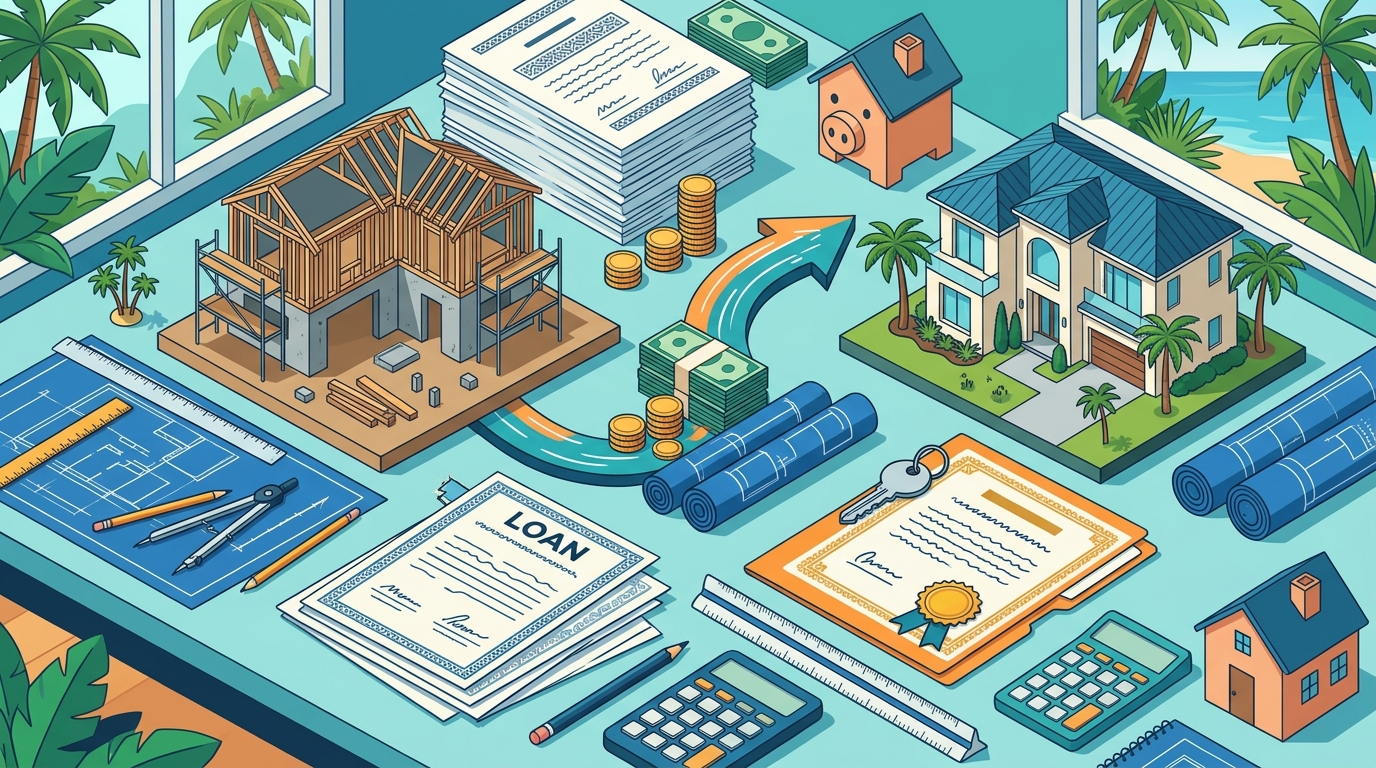
A construction-to-permanent loan, often called a construct-to-perm, is a single loan that covers both the construction phase and the long-term mortgage. This option is popular because it requires only one closing and one set of closing costs. At the end of the construction period, the loan converts to a fixed or adjustable-rate mortgage. This eliminates the need to qualify for a second loan once the home is finished.
Interest During Construction
Borrowers typically pay only interest on the amount drawn during the construction phase. This is significantly lower than the monthly payment on a fully amortized mortgage. Once the home is complete, the remaining balance is amortized over the loan term, such as 15 or 30 years. This structure provides cash flow relief during the build, which is crucial for managing the unpredictable costs of a custom project.
Lender Requirements and Qualification
Lenders have specific requirements for custom home financing that differ from standard mortgages. They typically require a detailed set of architectural plans and a line-item budget. The borrower must demonstrate sufficient income and assets to cover the loan payments and any cost overruns. A strong credit score is essential, as construction loans carry higher risk for lenders due to the uncertainty of the build process.
Documentation Needs
Applicants must provide proof of income, tax returns, and bank statements. They must also submit a comprehensive construction budget prepared by the builder. Vertical Custom Homes provides detailed budgeting and scheduling documents that satisfy lender requirements. These documents help streamline the approval process and ensure the project is viewed as a viable investment by the financial institution.
Budgeting for the Build
Managing Cost Overruns
Cost overruns are a common risk in custom construction. A well-structured budget with a contingency reserve mitigates this risk. Lenders may require the contingency to be held in escrow or released only with approval. Working with an experienced builder like Vertical Custom Homes helps identify potential cost drivers early, allowing for proactive budget adjustments. This approach ensures the financing remains aligned with the project's evolving needs.
Key Takeaways
- Construction loans release funds in stages based on completed work, protecting both borrower and lender.
- Land can be financed separately or combined with the construction loan, depending on ownership status.
- Lenders require detailed architectural plans, line-item budgets, and proof of financial stability.
- Interest during construction is typically lower than a standard mortgage payment, easing cash flow pressure.
- A contingency reserve is recommended to manage unexpected construction costs.
- Working with an experienced builder helps satisfy lender documentation requirements and streamline approval.
Frequently Asked Questions
What is a construction loan?
A construction loan is a short-term loan used to fund the building of a home. It releases funds in stages as the project progresses, and the borrower typically pays only interest on the drawn amount during the build phase.
Can I use a standard mortgage to build a custom home?
No, standard mortgages are for purchasing existing homes. Custom builds require construction loans or construction-to-permanent loans, which are designed to fund the building process and convert to a mortgage upon completion.
How much do I need for a down payment on a construction loan?
Down payment requirements vary by lender and borrower profile. Lenders typically require a significant portion of the total project cost, including land and construction, as equity. This percentage may be lower for borrowers with strong credit and assets.
Do I need to pay interest during the construction phase?
Yes, borrowers typically pay interest on the amount drawn during construction. This is usually lower than a full mortgage payment because the principal balance is not yet fully drawn. Interest payments are often made monthly or at the end of each draw period.
What documents do I need to apply for construction financing?
You need proof of income, tax returns, bank statements, architectural plans, a detailed construction budget, and a contract with the builder. Lenders also require a site survey and soil test results to assess the build site.
How long does it take to get approved for a construction loan?
Approval timelines vary depending on the completeness of the application and the lender's review process. Providing detailed plans and budgets early can expedite the approval timeline.
Next Steps for Your Sarasota Build
Financing a custom home in Sarasota requires careful planning and the right financial structure. By understanding construction loans, land financing, and budgeting requirements, you can secure the funding needed to bring your vision to life. Vertical Custom Homes provides the expertise and documentation needed to navigate this process with confidence. To begin your financing journey, contact our team to discuss your project and explore the best options for your Sarasota build. Learn more: verticalcustomhomes com.