
When checking a custom home builder's licenses and credentials, you must verify their state license number, confirm their insurance coverage, and review their professional affiliations. Vertical Custom Homes operates with full compliance in Sarasota, ensuring every project meets strict regulatory standards. This guide explains how to validate these critical details before signing a contract.
Understanding State Licensing Requirements
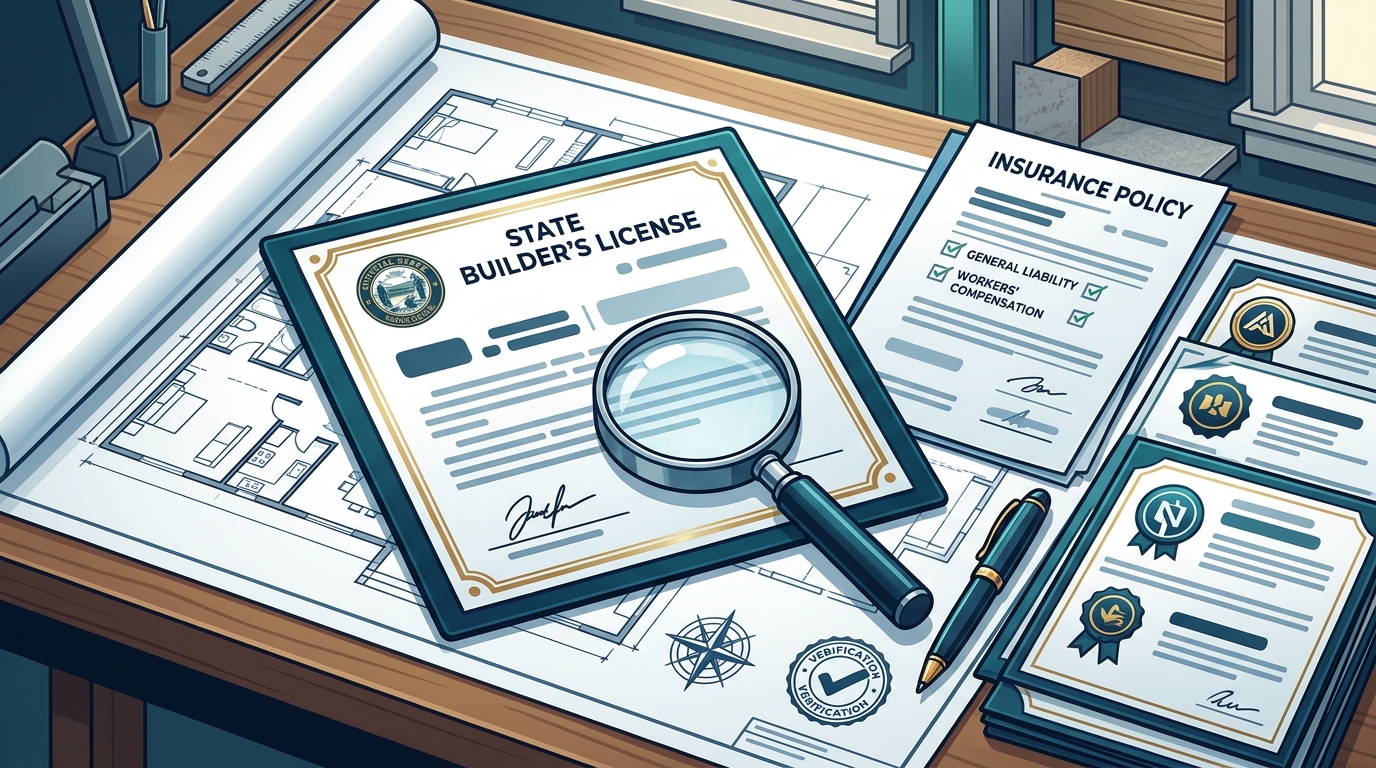
State licensing is the foundational credential for any residential contractor. In Alabama, for example, the Home Builders Licensure Board requires builders to complete specific applications and pass background checks to operate legally. The licensing process ensures that builders possess the necessary technical knowledge and financial responsibility. While Florida has its own Department of Business and Professional Regulation, the core principle remains identical: a valid license proves the builder is authorized to perform construction work. Without this verification, you risk working with an unlicensed entity that may lack the legal standing to enforce contracts or resolve disputes.
The Importance of License Status
A license is not a one-time achievement; it is an ongoing status that requires renewal and good standing. You should check the expiration date and ensure the license is active on the day you sign the agreement. An expired license renders any contract voidable and leaves you without legal recourse if the project fails. Always request a copy of the license certificate and cross-reference the number with the state database.
Verifying Insurance and Bonding
General liability insurance and workers' compensation are non-negotiable credentials for a reputable builder. These policies protect your property and your personal assets from accidents that occur on your job site. If a worker is injured and the builder lacks workers' compensation, you could be held liable for medical costs and lost wages. Request a Certificate of Insurance (COI) directly from the builder's insurance carrier, not just a copy provided by the builder. This document confirms the policy is active and lists you as an additional insured party.
Bonding and Financial Stability
Performance bonds are another layer of protection, particularly for larger custom builds. A bond guarantees that the builder will complete the project according to the contract terms. If the builder abandons the job or fails to meet specifications, the bond provides financial recourse. While not always mandatory for small remodels, bonding is a strong indicator of a builder's financial health and commitment to project completion.
Professional Affiliations and Certifications
Membership in industry organizations signals a builder's commitment to continuing education and ethical standards. Organizations like the National Association of Home Builders (NAHB) or local custom home councils require members to adhere to strict codes of conduct. These affiliations often provide dispute resolution mechanisms that are faster and less costly than litigation. Look for certifications in green building, such as LEED or Energy Star, if sustainability is a priority for your project. These credentials demonstrate specialized expertise beyond basic construction skills.
Design and Build Expertise
For design-build projects, verify that the firm holds both architectural and construction credentials. Vertical Custom Homes specializes in this integrated approach, ensuring that the design vision is technically feasible and cost-effective. A builder who manages both design and construction reduces communication gaps and ensures accountability for the final result. Check if the firm employs licensed architects or engineers in-house or maintains verified partnerships with them.
Reviewing Past Performance and References
Checking for Complaints and Litigation
Search for any history of complaints filed with the state licensing board or local consumer protection agencies. The Alabama Home Builders Licensure Board provides resources for consumers to look up licenses and file complaints. While a single complaint does not disqualify a builder, a pattern of unresolved disputes is a red flag. Review the nature of the complaints and how the builder responded. Transparency and proactive resolution are hallmarks of a professional operation.
Key Takeaways
- Always verify the state license number directly with the licensing board, not just with the builder.
- Request a Certificate of Insurance to confirm active general liability and workers' compensation coverage.
- Check for professional affiliations that require adherence to ethical codes and continuing education.
- Review past performance through direct references and online reviews to assess reliability.
- Search for any history of complaints or litigation to identify potential red flags.
- Ensure the builder holds appropriate bonding for large-scale custom projects.
Frequently Asked Questions
How do I verify a builder's license number?
You can verify a builder's license by visiting the website of your state's licensing board. Enter the license number provided by the builder into the search tool. If the license is not listed or is expired, do not proceed with the contract. For example, the Alabama Home Builders Licensure Board allows you to check the status of any license online.
What insurance should a custom home builder have?
A custom home builder should carry general liability insurance and workers' compensation. General liability covers property damage and bodily injury, while workers' compensation covers employee injuries. Request a Certificate of Insurance to verify the coverage limits and active status.
Is a performance bond required for custom homes?
Performance bonds are not always legally required, but they are highly recommended for large custom builds. A bond protects you if the builder fails to complete the project. It provides financial recourse to hire another contractor to finish the work.
How important are professional affiliations?
Professional affiliations are important because they indicate a commitment to industry standards and ethics. Members of organizations like NAHB must adhere to codes of conduct and complete continuing education. These affiliations also provide dispute resolution options.
What should I ask for references?
Ask for references from at least three recent clients who had projects similar to yours. Ask about the builder's communication, timeline adherence, and how they handled changes or issues. Direct references provide more insight than online reviews.
Can I work with an unlicensed builder?
No, you should not work with an unlicensed builder. Unlicensed builders cannot legally enforce contracts, and you may be liable for any injuries or damages. Always verify the license before signing any agreement.
Conclusion
Verifying a custom home builder's licenses and credentials is a critical step in protecting your investment. By checking state licenses, insurance, bonding, and professional affiliations, you ensure that you are working with a qualified and reliable partner. Vertical Custom Homes in Sarasota exemplifies this commitment to transparency and compliance, providing clients with the confidence to pursue their custom home vision. Take the time to verify these details before signing a contract. Learn more: verticalcustomhomes com.