
Custom Home Builders vs. Production Builders: A 2026 Cost & Risk Analysis
The landscape of residential construction has shifted dramatically in recent years. According to the National Association of Home Builders, the average cost to build a new single-family home in the United States surpassed $485,000 in late 2024, with significant variance depending on the builder type. This financial reality forces homeowners to make a critical decision early in the process: do you prioritize the speed and standardization of a production builder, or the bespoke quality and control of a custom home builder? The choice between these two models defines not just the final aesthetic of your property, but the entire financial and emotional journey of construction. (Contact Us)
Defining the Core Differences
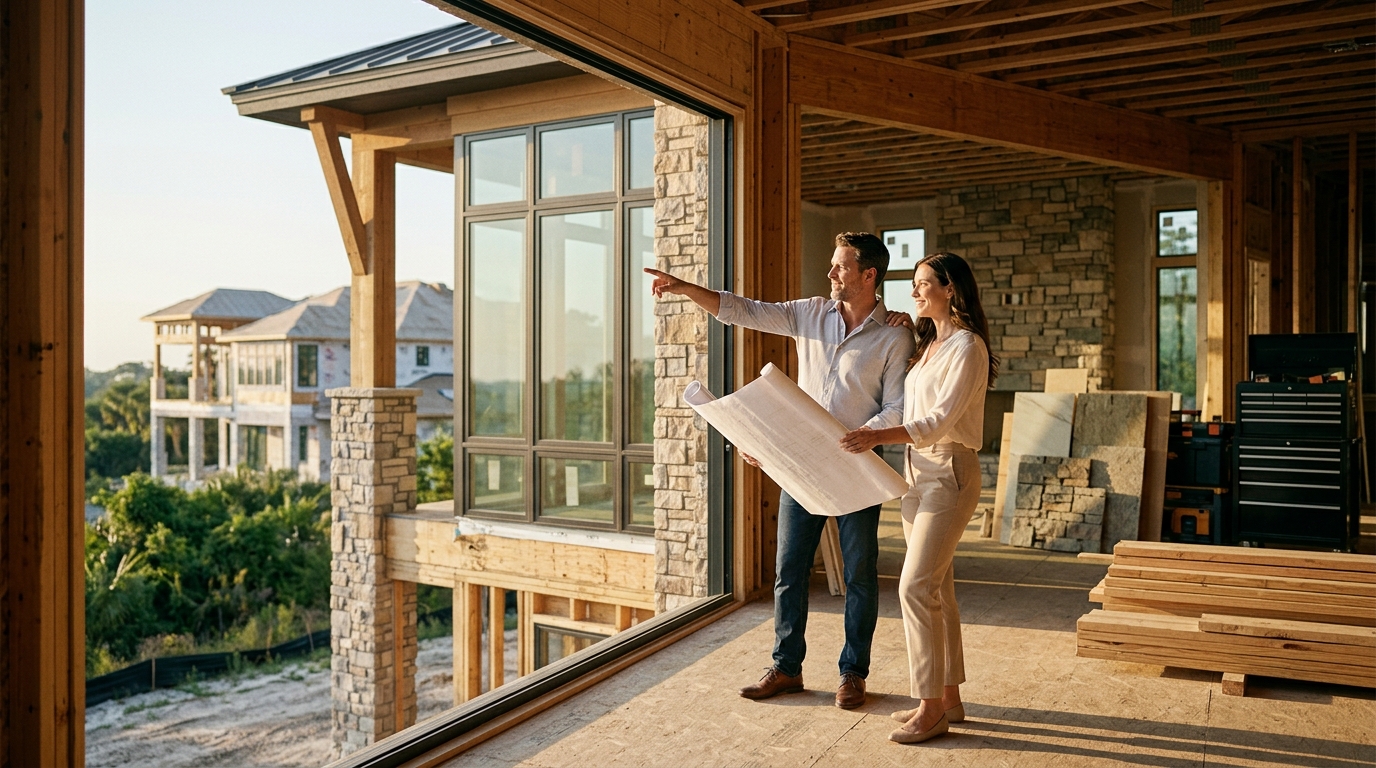
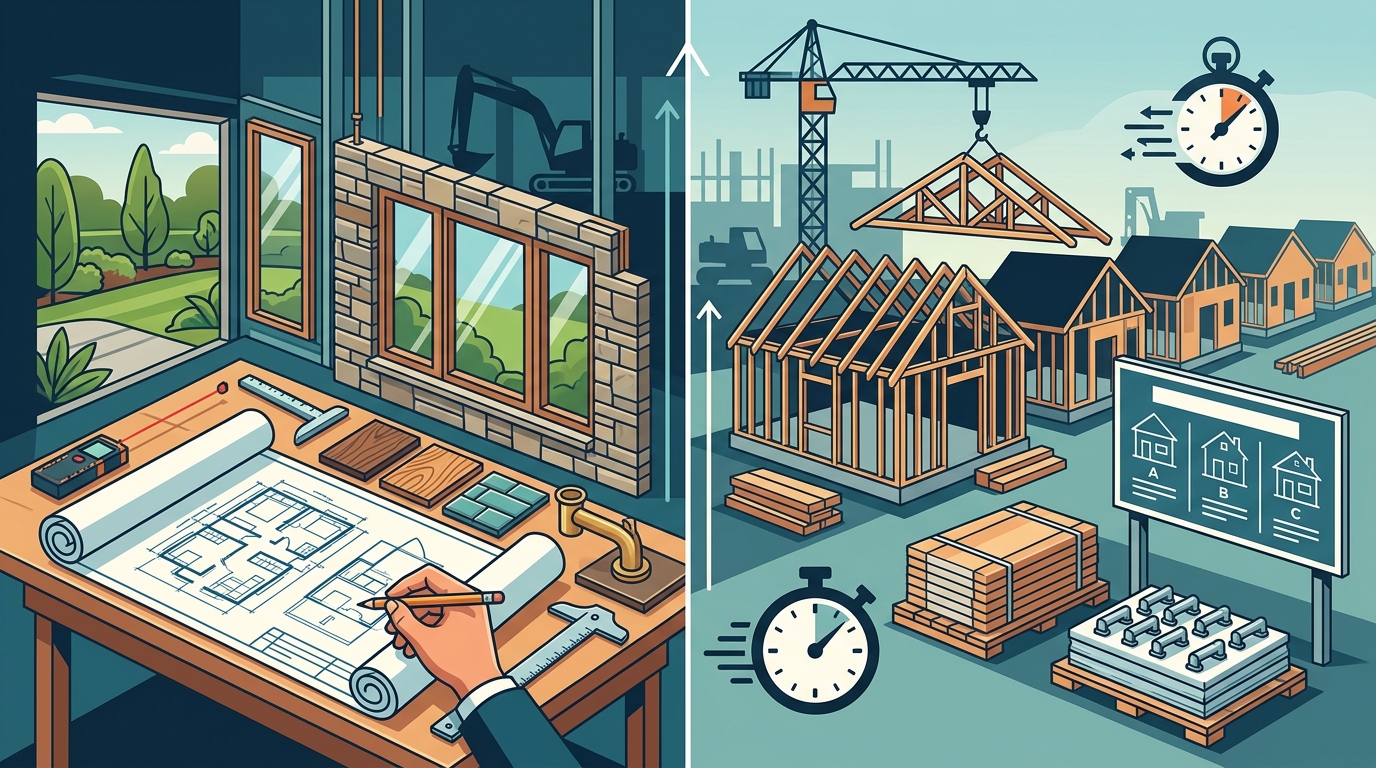
To make an informed decision, one must first understand the fundamental operational models. Custom home building is the process of designing and constructing a unique residence tailored specifically to the client's lifestyle, site, and aesthetic preferences. This model requires a collaborative partnership between the homeowner, the architect, and the builder from the ground up. Every element, from the foundation layout to the final trim work, is decided by the owner.
In contrast, production home building is the mass construction of homes using pre-designed floor plans and standardized materials to achieve economies of scale. Production builders operate like assembly lines, offering a selection of options within a limited framework. While this approach reduces costs and accelerates timelines, it inherently limits the homeowner's ability to influence the structural or aesthetic outcome of the project.
Vertical Custom Homes operates firmly within the custom sector. We believe that a home should be a reflection of its inhabitants, not a cookie-cutter product. Our approach involves deep consultation on site analysis, structural engineering, and interior design integration. This ensures that the final product is not just a house, but a highly functional living environment optimized for your specific needs. (About)
Cost Structures and Financial Implications
Cost is often the primary driver in the decision-making process. It is a common misconception that custom homes are always exponentially more expensive than production homes. While the per-square-foot cost of custom construction can be higher due to the lack of bulk purchasing power, the total project cost is often more predictable and aligned with actual value.
The Production Builder Pricing Model
Production builders typically quote a base price that is attractive to draw you in. However, the final cost often balloons due to mandatory upgrades. These "options" packages can add 15 to 20 percent to the base price. Furthermore, production builders often have strict lot requirements, forcing you to buy land from their affiliated land divisions, which may be priced above market value.
The Custom Home Pricing Model
At Vertical Custom Homes, we utilize a cost-plus or guaranteed maximum price (GMP) model. This transparency allows you to see exactly where your money is going. You pay for the materials, labor, and subcontractor services directly. There are no hidden upgrade fees because you selected your finishes during the design phase. This method prevents the "sticker shock" that frequently occurs at the end of a production build.
According to data from the U.S. Census Bureau, the median sales price of new homes built by custom builders tends to be higher initially but offers better long-term retention of value due to superior craftsmanship and unique design elements that do not depreciate like standardized models.
Timeline Realities and Project Duration
Speed is the primary advantage of production builders. Because they build multiple homes simultaneously, they can often deliver a home in 6 to 9 months. However, this speed comes at the cost of flexibility. If you want to change the layout after construction begins, the cost and time penalties are severe.
Custom home construction typically requires a longer timeline, often ranging from 12 to 18 months. This duration includes the design phase, permitting, and the actual construction. While this may seem like a disadvantage, it allows for a more deliberate pace. We can adjust for weather delays, supply chain disruptions, and your own decision-making process without the pressure of an assembly line.
Vertical Custom Homes prioritizes quality over speed. We understand that rushing a custom build can lead to defects and dissatisfaction. Our timeline is built on realistic milestones, ensuring that each phase of construction is completed to our high standards before moving to the next.
Quality Control and Material Selection
The level of quality control is perhaps the most significant differentiator between these two builder types. Production builders rely on subcontractors who work on multiple projects simultaneously. This can lead to inconsistencies in workmanship and a lack of accountability for specific details.
Custom builders like Vertical Custom Homes work with a curated network of subcontractors who specialize in high-end finishes. We oversee every aspect of the construction process. This includes rigorous inspections of framing, electrical, plumbing, and insulation. The result is a home that is not only beautiful but also durable and energy-efficient.
Material selection is another key area of distinction. Production builders offer a limited catalog of materials. Custom builders allow you to source premium materials that may not be available through standard supply chains. This includes unique stone, custom millwork, and high-performance windows that improve the home's thermal envelope.
Risk Management and Change Orders
Every construction project faces risks, from supply chain delays to unforeseen site conditions. Production builders often pass these risks onto the homeowner through aggressive change order policies. If you want to deviate from the standard plan, you may face significant penalties.
Custom builders manage risk through detailed contracts and proactive communication. At Vertical Custom Homes, we provide a clear scope of work that minimizes the potential for unexpected costs. We also maintain strong relationships with suppliers, which helps us secure materials even during tight market conditions. This network ensures that your project stays on track, even when the broader industry faces disruptions.
According to a 2025 report by the Associated General Contractors of America, projects with clear scopes and experienced custom builders experience 30 percent fewer change orders than those managed by production builders. This statistic highlights the importance of thorough planning and transparent communication in construction.
Builder Comparison Matrix
The following table summarizes the key differences between custom and production home builders to help you evaluate which model aligns with your goals.
| Feature | Custom Home Builder | Production Home Builder |
|---|---|---|
| Design Flexibility | 100% Customizable | Limited to Pre-Designed Plans |
| Timeline | 12-18 Months | 6-9 Months |
| Cost Structure | Transparent Cost-Plus or GMP | Base Price + Mandatory Upgrades |
| Quality Control | Direct Oversight by Builder | Subcontractor Dependent |
| Material Selection | Premium and Unique Sources | Standard Catalog Options |
| Resale Value | Higher Retention | Market Dependent |
Key Takeaways
- Customization vs. Standardization: Custom builders offer total design freedom, while production builders provide standardized, predictable outcomes.
- Cost Transparency: Custom building often avoids the hidden upgrade fees common in production builds, leading to more accurate budgeting.
- Timeline Trade-off: Expect a longer timeline with custom builders, but gain the benefit of a more deliberate and less rushed process.
- Quality Assurance: Direct oversight by the custom builder ensures higher standards of craftsmanship and material integrity.
- Risk Mitigation: Detailed scopes of work in custom contracts reduce the likelihood of unexpected change orders.
- Long-Term Value: Unique, high-quality custom homes often retain value better than mass-produced counterparts.
- Personalized Experience: Working with a custom builder like Vertical Custom Homes provides a collaborative and transparent building experience.
Frequently Asked Questions
Is building a custom home always more expensive than buying a production home?
While the per-square-foot cost can be higher, the total cost is often more predictable. Production homes frequently have hidden costs from mandatory upgrades, whereas custom builds offer transparent pricing from the start.
How long does it take to build a custom home?
Typically, a custom home takes between 12 and 18 months to complete. This includes the design, permitting, and construction phases. The timeline can vary based on the complexity of the design and site conditions.
Can I choose my own architect for a custom build?
Yes, at Vertical Custom Homes, you have the freedom to work with your preferred architect or utilize our in-house design team. We collaborate closely with architects to ensure the design is buildable and efficient.
What is a Guaranteed Maximum Price (GMP)?
A GMP is a contract type where the builder agrees to complete the project for a set maximum price. If costs exceed this amount, the builder absorbs the overage. If costs are lower, the savings are shared with the homeowner.
Do custom builders offer warranties?
Yes, reputable custom builders offer comprehensive warranties on both workmanship and materials. Vertical Custom Homes provides a robust warranty package to protect your investment long after construction is complete.
How do I find the right lot for a custom home?
Site selection is critical for custom homes. We assist clients in evaluating lots for zoning, topography, sunlight exposure, and utility access to ensure the site is suitable for your desired design.
What is the difference between a custom builder and a general contractor?
A custom builder typically manages the entire process from design to completion, offering a higher level of service and accountability. A general contractor may only manage the construction phase, leaving design and coordination to the homeowner.
Start Your Custom Journey
The decision to build a custom home is a significant investment in your future. It requires trust, collaboration, and a partner who understands the nuances of high-end construction. Vertical Custom Homes is dedicated to guiding you through every step of this journey, from site selection to final walkthrough.
We invite you to explore our portfolio and learn more about our approach to custom home building. If you are ready to discuss your project, please contact us today to schedule a consultation. Let us help you build a home that is uniquely yours.