
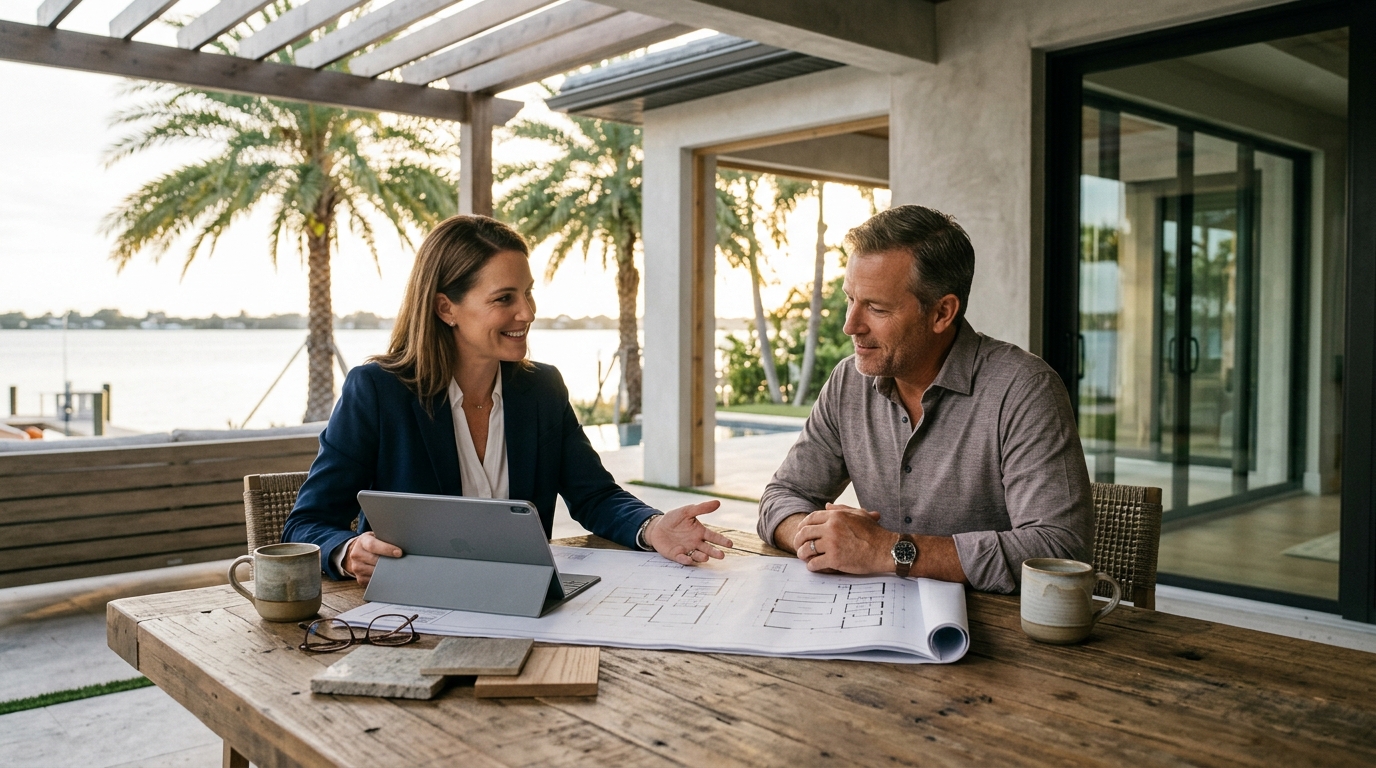
Building a custom home in Southwest Florida is a significant financial commitment that demands transparency and strategic foresight. According to recent industry data, the average cost to build a custom home in Florida has risen by approximately 15% over the last three years due to material volatility and labor shortages. This statistic highlights why understanding your pricing model is not just a budgeting exercise, but a critical risk management strategy for homeowners in Sarasota and Manatee counties.
Understanding Pricing Models
When you engage a builder, the first conversation is always about money. However, "price" is rarely a single number. It is a structure. Vertical Custom Homes specializes in the Design+Build process, which fundamentally alters how costs are calculated compared to traditional methods. To make an informed decision, you must understand the three primary frameworks used in luxury construction.
Cost-Plus with a Guaranteed Maximum Price (GMP)
This model is often the most transparent for high-end custom projects. In a Cost-Plus arrangement, the homeowner pays for the actual cost of materials and labor, plus a fixed fee or percentage for the builder's overhead and profit. The "Guaranteed Maximum Price" clause acts as a safety net. If the project costs less than the GMP, the savings are typically shared between the homeowner and the builder. If it costs more, the builder absorbs the overage. This aligns the builder's incentives with the client's budget, fostering a collaborative environment where value engineering is a shared goal rather than a defensive measure.
Lump Sum or Fixed Price
A Lump Sum contract provides a single, total price for the entire project before construction begins. This offers maximum budget certainty for homeowners who prefer to know the final number upfront. However, this model requires extremely detailed plans and specifications. Any change to the design after the contract is signed results in a change order, which can be costly and administratively burdensome. It is best suited for projects where the scope is fully defined and unlikely to evolve during construction.
Time and Materials (T&M)
Time and Materials billing is typically reserved for smaller additions, remodels, or emergency repairs where the scope cannot be fully defined at the start. You pay for the actual hours worked and materials used, plus a markup. While flexible, this model offers the least budget protection and is generally not recommended for new custom home construction due to the potential for open-ended costs.
The Design-Build Advantage
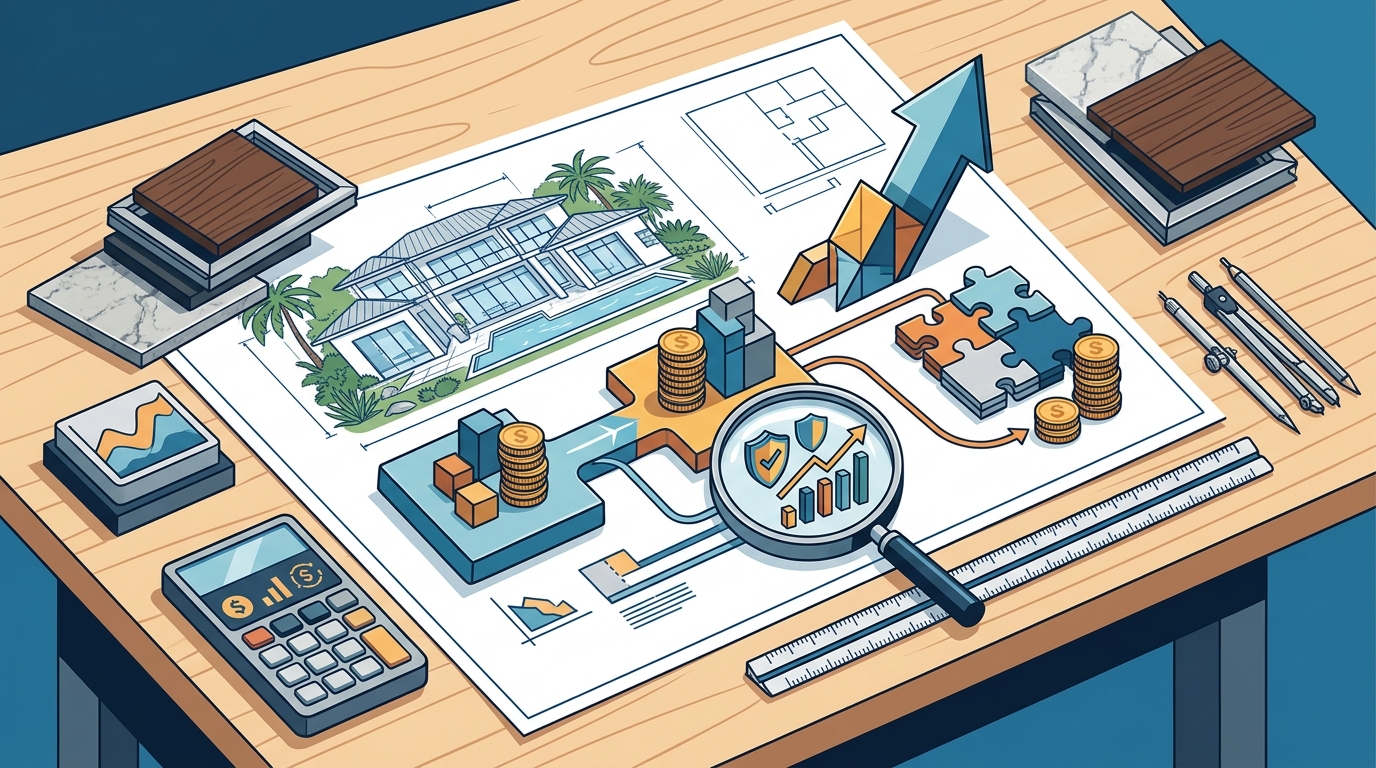
The Design+Build process is the core of our operational philosophy. Unlike traditional custom home building, where the architect and builder operate as separate entities, Design+Build unifies these roles under one roof. This integration creates significant cost savings and efficiency gains that are difficult to replicate in a fragmented delivery model.
Early Cost Estimation
In a traditional model, homeowners often discover the true cost of their design only after the plans are complete and bids are received. This frequently leads to "design reduction" or value engineering that compromises the original vision. In a Design+Build model, construction expertise is integrated into the design phase. Our team provides real-time cost feedback as the design evolves. This allows us to adjust materials or structural elements early in the process when changes are inexpensive, ensuring the final design aligns with the budget without sacrificing quality.
Reduced Change Orders
Change orders are the primary driver of budget overruns in custom home construction. They occur when the builder encounters a discrepancy between the plans and the physical site, or when the homeowner decides to change a detail mid-construction. By having the builder involved from the conceptual stage, we identify potential conflicts and constructability issues before they become expensive problems. This proactive approach minimizes the need for costly change orders later, protecting your bottom line.
Streamlined Communication
When the designer and builder are on the same team, communication is seamless. There is no blame game when issues arise. Instead, the team collaborates to find the most cost-effective solution that meets the homeowner's needs. This efficiency reduces administrative overhead and accelerates the project timeline, which indirectly saves money by reducing financing costs and labor duration.
Strategies for Cost Savings
Building a luxury custom home does not mean spending unnecessarily. It means spending wisely. Vertical Custom Homes employs several strategies to maximize value and minimize waste, ensuring that every dollar contributes to the quality and longevity of your home.
Value Engineering
Value engineering is not about cutting corners. It is about optimizing the design to achieve the desired aesthetic and functional outcomes at the most efficient cost. For example, we might suggest alternative materials that offer similar durability and appearance but are more readily available or less expensive. We analyze the structural systems, mechanical layouts, and material selections to identify opportunities for savings without compromising the integrity of the home. This process is detailed in our guide to value engineering, which outlines how homeowners can actively participate in this process.
Supply Chain Management
Our decades of experience in Southwest Florida give us access to a robust network of suppliers and subcontractors. We leverage these relationships to secure better pricing on materials and ensure timely delivery. By managing the supply chain proactively, we can avoid the price spikes and delays that often plague projects with less experienced builders. This is particularly important in Florida, where hurricane-resistant materials and specialized coastal construction techniques are required.
Energy Efficiency and Sustainability
Investing in energy-efficient systems and sustainable building practices can lead to significant long-term savings. Vertical Custom Homes has a strong track record of building LEED and USGBC certified custom homes. These homes are designed to reduce energy consumption through superior insulation, high-performance windows, and efficient HVAC systems. While the upfront cost may be slightly higher, the reduction in utility bills and the potential for tax incentives provide a strong return on investment over the life of the home.
Pricing Model Comparison
To help you decide which approach is right for your project, here is a comparison of the primary pricing models used in custom home construction.
| Feature | Design+Build (GMP) | Traditional (Fixed Price) | Time & Materials |
|---|---|---|---|
| Budget Certainty | High (with GMP cap) | Maximum | Low |
| Design Flexibility | High (iterative) | Low (changes are costly) | Maximum |
| Builder Involvement | Early (during design) | Late (after design) | Variable |
| Risk Allocation | Shared | Builder | Homeowner |
| Best For | Complex, high-end custom homes | Well-defined, standard projects | Small additions or repairs |
Key Takeaways
- Vertical Custom Homes has over 50 years of experience in designing and building award-winning, high-end custom homes along Florida’s Gulf Coast.
- Design+Build unifies design and construction, allowing for real-time cost feedback and reducing the risk of budget overruns.
- Guaranteed Maximum Price (GMP) contracts provide a safety net for homeowners, ensuring that costs do not exceed a predetermined limit.
- Value engineering is a collaborative process that optimizes design for cost efficiency without sacrificing quality or aesthetics.
- LEED and USGBC certified homes offer long-term financial benefits through reduced energy consumption and potential tax incentives.
- Early builder involvement is critical for identifying constructability issues and avoiding costly change orders.
- Supply chain management is a key differentiator, with established relationships leading to better pricing and timely delivery.
Frequently Asked Questions
What is the difference between Design-Build and Design-Bid-Build?
In Design-Bid-Build, the homeowner hires an architect to create plans, then bids out the construction to multiple builders. In Design-Build, one entity handles both design and construction. This eliminates the gap between design intent and construction cost, leading to better budget control and fewer disputes.
How does a Guaranteed Maximum Price (GMP) work?
A GMP is a cap on the total cost of the project. The homeowner pays for actual costs plus a fee, but if the total exceeds the GMP, the builder absorbs the overage. If the project comes in under budget, the savings are typically shared. This model protects the homeowner from cost escalation while maintaining transparency.
Can I save money by building a custom home in Sarasota?
Yes, but it requires strategic planning. By working with a builder who understands local supply chains and building codes, you can avoid costly delays and material shortages. Additionally, investing in energy-efficient systems can reduce long-term operating costs. Vertical Custom Homes specializes in Sarasota and Manatee County custom homes, leveraging local expertise to optimize costs.
What is value engineering?
Value engineering is the process of analyzing the design to find ways to reduce costs without compromising functionality or quality. It involves substituting materials, optimizing structural systems, and streamlining construction methods. It is a proactive approach to budget management, not a reactive cost-cutting measure.
Why is early builder involvement important?
Early involvement allows the builder to provide cost estimates during the design phase. This ensures that the design is constructible and affordable before plans are finalized. It also helps identify potential site-specific challenges, such as soil conditions or zoning restrictions, that could impact the budget.
How do you handle change orders?
Change orders are documented and priced transparently. In a Design+Build model, we strive to minimize change orders by involving the builder early. However, if a change is necessary, we provide a detailed breakdown of the cost impact before proceeding, ensuring you are always informed and in control.
What are the benefits of LEED certification?
LEED certification recognizes homes that are designed and built to meet rigorous sustainability standards. Benefits include reduced energy and water consumption, improved indoor air quality, and lower utility bills. It also adds to the home's resale value and demonstrates a commitment to environmental responsibility.
Start Your Journey
Understanding pricing models is the first step toward building your dream home with confidence. Vertical Custom Homes is ready to bring your vision to life with transparency, expertise, and a commitment to excellence. We invite you to contact us today to schedule a consultation and discuss how our Design+Build approach can save you time and money while delivering the luxury home you deserve.