
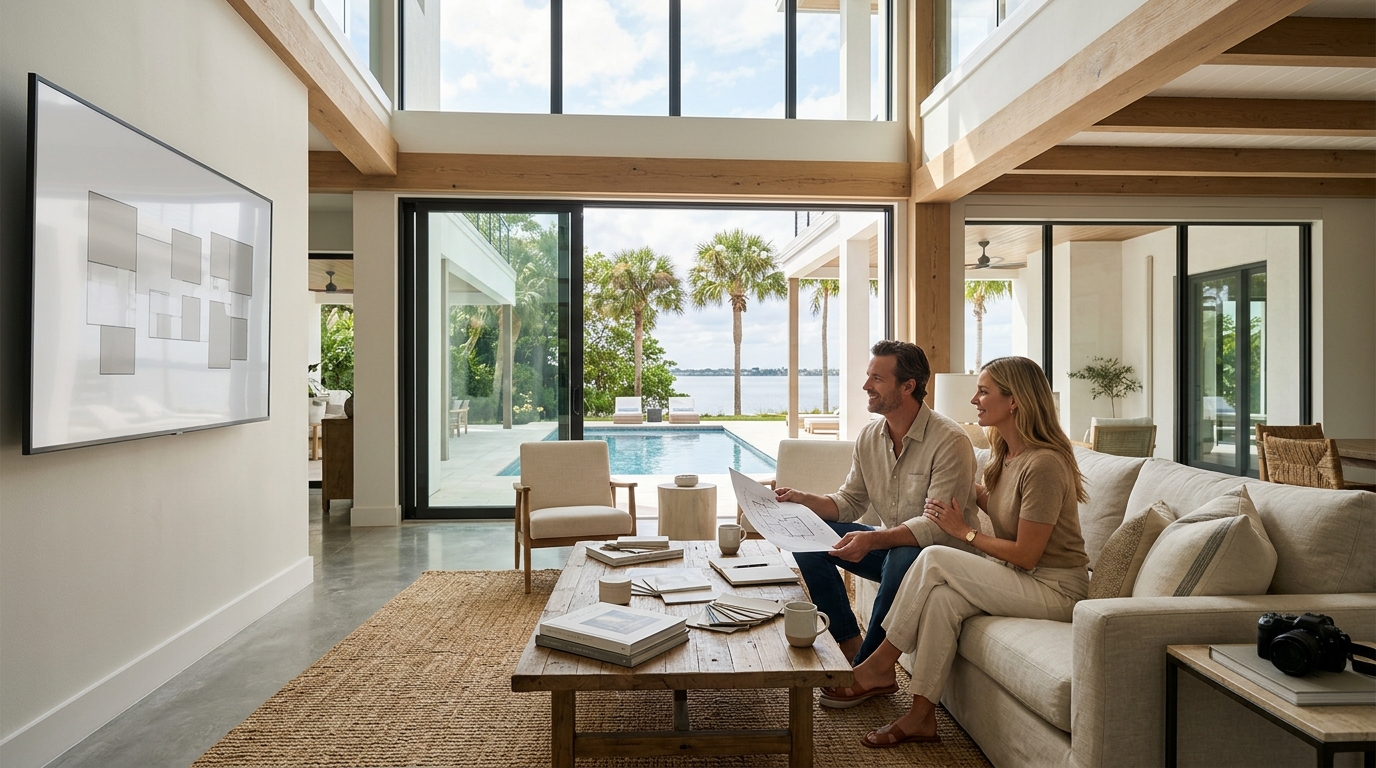
Building a custom home is one of the most personal investments you will ever make. Unlike buying a production home off a lot, a custom build gives you the power to shape every room, hallway, and outdoor space around the way you actually live. But translating daily routines, future plans, and personal taste into architectural plans takes more than a wish list. It requires a deliberate process that connects your lifestyle goals to design decisions from day one. Below, you will find a practical framework for making sure your Sarasota custom home fits your life today and for decades to come.
Define Your Lifestyle Before You Pick a Floor Plan
A lifestyle-driven home design is a planning approach that begins with how you live rather than how a home looks. Before reviewing architectural styles or square-footage estimates, sit down and audit your daily life. How often do you entertain? Do you work from home? Do you need a dedicated fitness space or art studio?
According to the National Association of Home Builders' 2024 What Home Buyers Really Want report, a dedicated home office ranked among the top five most-wanted features for buyers under 55. Knowing details like this helps you prioritize spaces that genuinely improve your quality of life.
Create a Lifestyle Questionnaire
Write down answers to questions like: How many people will live in the home full-time? Do you host overnight guests regularly? What hobbies need dedicated space? This document becomes the brief your architect and builder reference throughout the project.
Identify Non-Negotiables vs. Nice-to-Haves
Separate your must-haves (a ground-floor primary suite, a three-car garage) from wish-list items (a wine cellar, a rooftop deck). This hierarchy prevents budget creep and keeps the design focused on what matters most to your household.
Map Daily Routines to Room Layouts
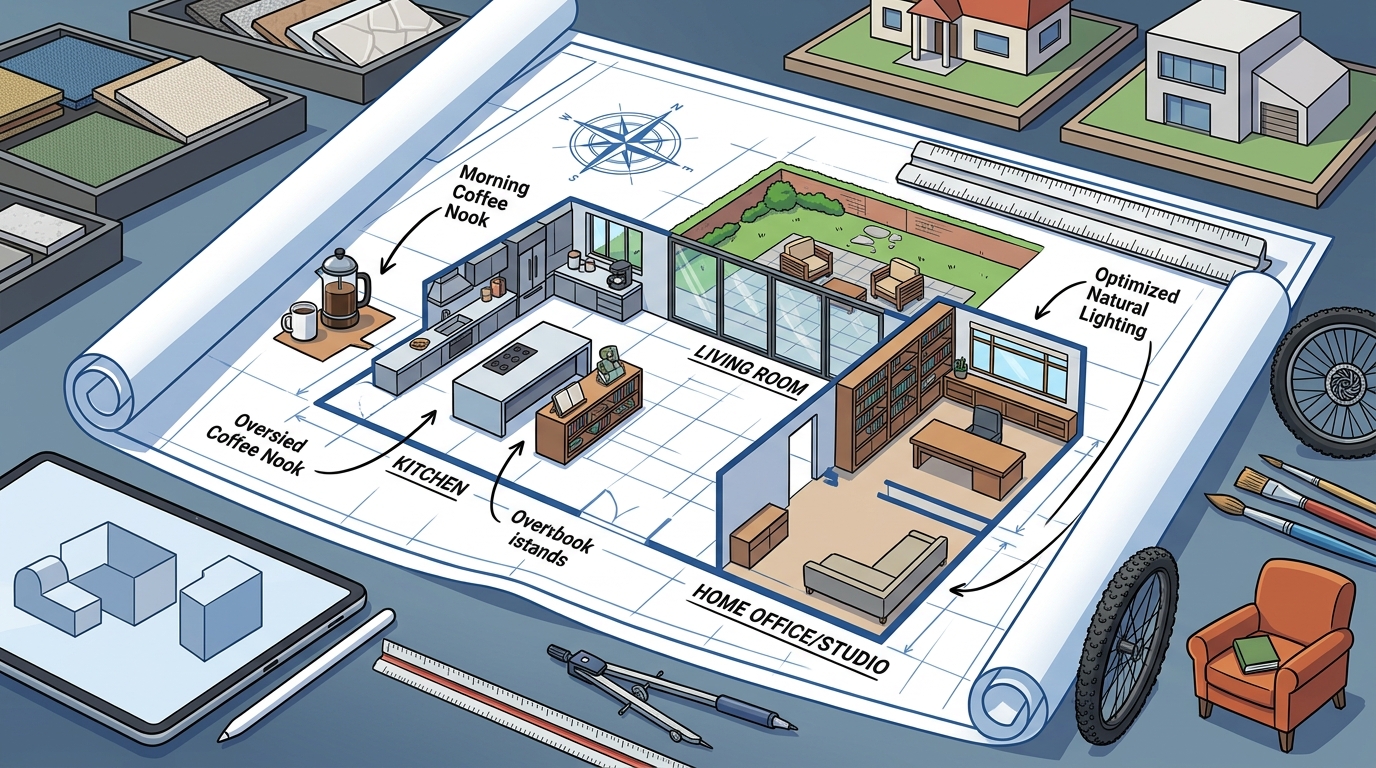
A functional floor plan is an arrangement of rooms and circulation paths that mirrors the way occupants move through their day. Think about your morning: do you go from bedroom to bathroom to closet to kitchen? Placing those rooms in a logical sequence reduces unnecessary hallways and wasted square footage.
For families with young children, an open-concept kitchen that overlooks a family room allows supervision while cooking. Empty nesters, on the other hand, may prefer a split-plan layout that places guest suites away from the primary bedroom for privacy. Vertical Custom Homes walks through this exact planning process in their guide on designing a home that grows with your family.
Kitchen as Command Center
The kitchen is the most-used room in most American homes. Whether you are an avid cook or a casual entertainer, layout decisions like island size, pantry depth, and appliance placement should reflect your habits. Explore more in Vertical Custom Homes' post on tips for designing your dream kitchen.
Future-Proof Your Design
Universal design is a building philosophy that makes spaces accessible and comfortable for people of all ages and abilities. Even if you do not need grab bars or wider doorways now, incorporating them during construction costs a fraction of retrofitting later.
Consider these forward-looking moves:
- Reinforce bathroom walls for future grab-bar installation.
- Include a bedroom and full bath on the ground floor.
- Wire every room for smart-home technology so upgrades are plug-and-play. Vertical Custom Homes covers this topic in their overview of smart home technology trends.
- Design bonus rooms with flexible uses, from playroom to home gym to guest suite. See creative ideas in ways to use a bonus room.
Embrace Indoor-Outdoor Living
In Sarasota, where mild winters and Gulf breezes define the climate, blurring the line between indoors and out is not a luxury but a lifestyle necessity. Retractable glass walls, covered lanais, and outdoor kitchens effectively double your living space for much of the year.
Vertical Custom Homes recently explored this topic in depth in their article on indoor-outdoor living for year-round entertaining in Sarasota. Thoughtful site orientation, pool placement, and landscape integration can transform a backyard into a true extension of your home.
Why Design+Build Keeps Your Vision on Track
The Design+Build process is a project delivery method in which one entity manages both architectural design and construction under a single contract. This model eliminates the communication gaps that often cause a home to drift away from the owner's original vision.
At Vertical Custom Homes, the team includes architects, interior designers, structural engineers, estimators, and construction managers who collaborate from the very first meeting. Because the builder is involved during design, cost feedback is immediate. That means fewer surprise change orders and a final product that stays aligned with your lifestyle goals and budget.
Early builder involvement also helps prevent budget overruns, a topic Vertical Custom Homes addresses in their post on the true cost of changes.
Traditional Build vs. Design+Build: A Quick Comparison
| Factor | Traditional (Architect then Builder) | Design+Build |
|---|---|---|
| Points of contact | Multiple (architect, builder, subs) | Single team |
| Cost visibility during design | Limited until bid phase | Real-time budget feedback |
| Lifestyle alignment | Depends on architect-builder handoff | Continuous from concept to creation |
| Change-order risk | Higher | Lower |
| Timeline efficiency | Sequential phases | Overlapping phases save weeks |
Learn more about this approach on the Vertical Custom Homes Design+Build services page.
Key Takeaways
- Start with a lifestyle audit, not a floor plan. Your daily routines should drive every design decision.
- Separate must-haves from nice-to-haves early to protect your budget.
- Map room layouts to the way you actually move through your day for maximum functionality.
- Future-proof your home with universal design features and smart-home wiring.
- Leverage Sarasota's climate by integrating indoor-outdoor living spaces.
- Choose a Design+Build partner so your builder is at the table during design, not after it.
- Collaborate with a team that treats your lifestyle vision as the project's north star.
Frequently Asked Questions
What is the first step to designing a lifestyle-focused custom home?
The first step is conducting a lifestyle audit. Document how every member of your household uses space daily, including work habits, hobbies, entertaining frequency, and mobility needs. This audit becomes the design brief your architect and builder follow throughout the project.
How does Design+Build differ from the traditional approach?
In a Design+Build model, one team handles both design and construction. This creates a single point of communication, delivers real-time cost feedback during the design phase, and significantly reduces change-order risk compared to hiring an architect and builder separately.
Can I customize a lifestyle floor plan from Vertical Custom Homes?
Yes. Vertical Custom Homes offers lifestyle plans that serve as a starting point. Each plan can be tailored to your lot, preferences, and daily routines so the finished home feels uniquely yours.
How do I make my custom home accessible for aging in place?
Incorporate universal design features during construction: wider doorways (minimum 36 inches), a curbless primary shower, reinforced walls for grab bars, and at least one bedroom with a full bath on the ground floor. These additions cost far less during initial construction than as retrofits.
What lifestyle features add the most value in Sarasota?
Indoor-outdoor living spaces, hurricane-rated impact windows, energy-efficient building envelopes, and dedicated home offices consistently rank highest for resale value and daily enjoyment in the Sarasota market.
How early should I involve my builder in the design process?
As early as possible. Bringing your builder in before plans are finalized allows for real-time cost checks, constructability reviews, and material sourcing. This prevents expensive redesigns later. Read more about when to hire your custom home builder.
Should I buy land before choosing a builder?
Not necessarily. A builder who understands Sarasota's zoning, flood zones, and soil conditions can help you evaluate lots before you commit. Vertical Custom Homes discusses this strategy in their post on whether to buy land first or find a builder first.
How long does a custom home take to build in Sarasota?
Most custom homes in the Sarasota area take 12 to 18 months from groundbreaking to move-in, depending on size, complexity, and permitting timelines. The Design+Build model can shorten overall project duration by overlapping design and preconstruction phases.
Start Your Custom Home Journey
Your home should be as unique as the life you live in it. If you are ready to turn your lifestyle vision into a concrete plan, schedule a discovery call with Vertical Custom Homes today. Their Concept-to-Creation team will walk you through the process, answer your questions, and help you design a Sarasota custom home that truly fits.